
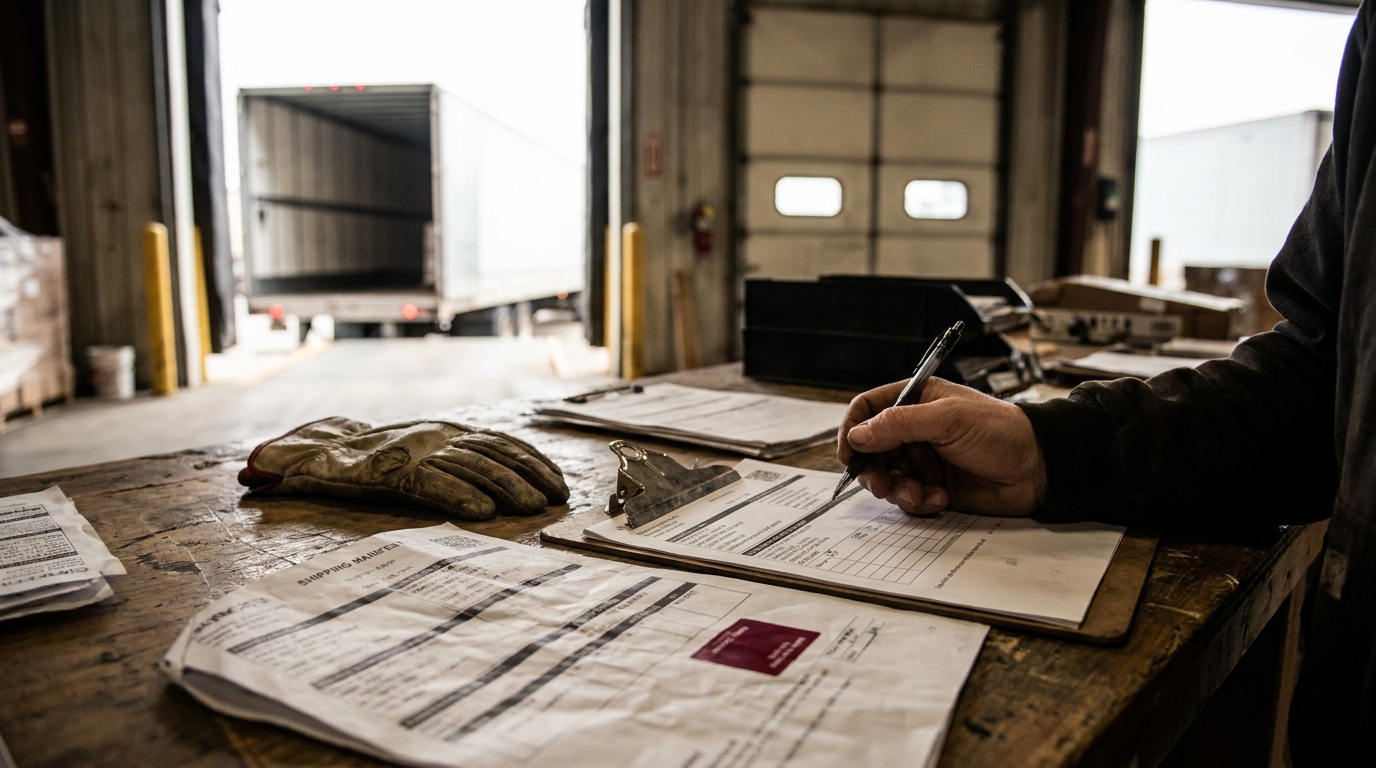
LTL (Less-Than-Truckload) shipping is a cost-effective solution for businesses moving freight that doesn't fill an entire truck. However, the complexity of LTL pricing, particularly the role of freight class, often leads to unexpected charges. Among the most frustrating of these are reclassification fees, which can significantly inflate shipping costs and disrupt supply chains.
Understanding and accurately classifying your freight is paramount to avoiding these penalties. This definitive guide will explore the intricacies of LTL reclassification, detail the factors that lead to these fees, and provide actionable strategies and technological solutions to ensure your shipments are always classified correctly, saving you time and money.
What are LTL Reclassification Fees and Why Do They Occur?
> LTL reclassification fees are additional charges incurred when a carrier determines that the actual characteristics of a shipment—such as its dimensions, weight, or commodity type—differ from what was declared on the bill of lading (BOL). These discrepancies lead to a recalculation of the freight class, often resulting in a higher, more expensive class and subsequent fees.
Reclassification fees arise from a mismatch between the shipper's declared freight class and the carrier's assessment. Carriers use sophisticated dimensioning equipment and scales to verify shipment details. If their measurements or commodity identification reveal a higher freight class than initially stated, they will reclassify the shipment and charge the difference, plus an administrative fee. This is a common practice to ensure fair pricing based on the actual cost to transport the goods, which is heavily influenced by factors like space occupied, handling difficulty, and liability.
How Does Freight Class Impact LTL Shipping Costs?
> Freight class is a standardized system, established by the National Motor Freight Traffic Association (NMFTA), that categorizes goods for LTL shipping. It directly impacts shipping costs because it reflects the carrier's cost to transport an item, considering its density, stowability, handling ease, and liability. Higher classes mean higher rates.
The NMFC (National Motor Freight Classification) system assigns a class from 50 to 500 to virtually every type of commodity. Class 50 represents the least expensive freight to ship, typically dense, durable goods that are easy to handle. Conversely, Class 500 is for the most expensive freight, often light, fragile, or difficult-to-stow items. A difference of just one or two classes, for example from Class 70 to Class 100, can lead to a substantial increase in per-pound shipping rates, making accurate classification critical for budget control.
What is the Role of Density in Determining Freight Class?
> Density is the primary factor in determining a shipment's freight class for most commodities, especially those classified under "density-based" rules. Calculated as weight divided by volume (cubic feet), density directly correlates with freight class: lower density (lighter, bulkier items) results in a higher, more expensive freight class, while higher density (heavier, compact items) yields a lower class.
For many commodities, the NMFC guidelines specify a range of freight classes based on density. To calculate density, you first determine the total cubic feet of the shipment by multiplying its length, width, and height (all in inches), then dividing by 1,728 (the number of cubic inches in a cubic foot). Next, divide the shipment's total weight (in pounds) by its total cubic feet. For instance, a pallet weighing 500 lbs and measuring 48" L x 40" W x 60" H has a volume of 80 cubic feet (48x40x60 / 1728) and a density of 6.25 lbs per cubic foot (500 / 80). This density would then correspond to a specific freight class as per the NMFC tables.
| Density (lbs/cu ft) | Typical Freight Class |
|---|---|
| 1-2 | Class 250 |
| 2-4 | Class 150 |
| 4-6 | Class 100 |
| 6-8 | Class 85 |
| 8-10 | Class 70 |
How Can I Accurately Measure Freight Dimensions and Weight?
> Accurate measurement of freight dimensions (length, width, height) and weight is fundamental to preventing reclassification fees. Even minor discrepancies, such as an extra 0.5-1 inch in any dimension, can push a shipment into a higher density bracket or exceed pallet limits, leading to a higher freight class and unexpected charges.
Traditional methods involving tape measures are prone to human error, especially with irregular shapes or multiple items on a pallet. It's crucial to measure the greatest point of each dimension, including any overhangs, packaging, or pallet extensions. For weight, always use a calibrated scale. Guessing or estimating dimensions and weight is a leading cause of reclassification. Many carriers now utilize automated dimensioning systems that are highly precise, making it imperative for shippers to match that precision.
This is where modern tools shine. The FreightSizer app, available for free on the App Store, leverages LiDAR technology on iPhones and iPads to provide highly accurate dimensions of your freight. It eliminates manual measurement errors, calculates density automatically, and determines the correct LTL freight class in line with NMFTA guidelines, directly addressing the problem of inaccurate data entry.
What are Common Mistakes Leading to Reclassification?
> Several common errors frequently lead to LTL reclassification fees, primarily stemming from inaccurate data submission. These include understating dimensions or weight, misidentifying the commodity, failing to account for packaging, or incorrectly applying the NMFC code. Each mistake can result in the carrier assessing a higher freight class.
One prevalent mistake is "rounding down" dimensions or weight to fit a lower class or rate. Carriers will always use the actual, precise measurements. Another error is neglecting to include the pallet or any packaging material in the total dimensions and weight. Freight must be measured in its final, shippable form. Furthermore, misidentifying a commodity or using a generic description instead of the specific NMFC item number (e.g., "auto parts" instead of "NMFC 2026, Auto Parts, NOI") can lead to the carrier assigning a higher class by default or based on their own interpretation.
How Can Technology Help Prevent Reclassification Fees?
> Technology offers powerful solutions to combat reclassification fees by automating and standardizing the measurement and classification process. Digital tools minimize human error, ensure compliance with NMFTA guidelines, and provide verifiable data, leading to accurate freight class determination before the shipment leaves the dock.
Modern logistics technology, such as dimensioning systems and specialized mobile apps, can significantly improve accuracy. These tools capture precise measurements, calculate density, and often suggest the correct freight class based on the NMFC rules. By integrating these tools into your shipping workflow, you can generate accurate bills of lading consistently, reducing the likelihood of discrepancies. This proactive approach helps avoid costly surprises and fosters better relationships with carriers due to reliable data.
For instance, FreightSizer is a free iPhone and iPad app that utilizes LiDAR technology to measure freight dimensions with high precision. It then automatically calculates density and determines the LTL freight class according to NMFTA guidelines. This eliminates the need for manual tape measures, reduces errors, and provides shippers, 3PLs, and carriers with consistent, verifiable data, directly preventing reclassification issues.
What Documentation is Essential for Accurate LTL Shipments?
> Comprehensive and accurate documentation is critical for LTL shipments to prevent reclassification. The Bill of Lading (BOL) is the most vital document, requiring precise details including the correct NMFC item number, freight class, exact dimensions, and total weight. Supporting documentation like packing lists or product specifications can also be beneficial.
The BOL serves as a legal contract between the shipper and the carrier. It must clearly state the shipper's declared freight class and all supporting information. Any ambiguity or missing information on the BOL can lead to the carrier making assumptions, which often result in a higher class. Always include the specific NMFC item number (e.g., NMFC 100000 for "Machinery, NOI") rather than just a generic description. Ensure the weight and dimensions listed match your internal measurements exactly. Having photographs of the packaged freight can also serve as proof in case of a dispute.
How Can Consistent Internal Processes Reduce Reclassification?
> Implementing consistent internal processes for freight measurement, classification, and documentation is key to minimizing reclassification fees. Standardized operating procedures ensure every shipment follows the same rigorous steps, reducing variability and human error across all warehouse and shipping teams.
Establish clear guidelines for how freight should be measured, packaged, and documented. This includes training staff on the importance of accurate data, the use of measurement tools, and understanding NMFC rules. Designate specific personnel responsible for freight classification and empower them with the necessary resources. Regular audits of outgoing shipments and carrier invoices can help identify recurring issues and areas for improvement. A "measure twice, ship once" philosophy, supported by robust internal checks, will significantly reduce errors.
What Steps Should I Take If a Reclassification Occurs?
> If a reclassification occurs, the first step is to review the carrier's reweigh/reclass notification and compare it against your original BOL and internal records. If you believe the reclassification is incorrect, gather all supporting evidence, including photos, measurement logs, and product specifications, and dispute the charge with the carrier promptly.
Carriers typically provide a window (e.g., 30-60 days) to dispute reclassification charges. Carefully examine the carrier's reasoning for the reclassification. Was it a weight discrepancy, a dimension change, or a different commodity identification? If you have accurate internal records, such as those generated by FreightSizer, that contradict the carrier's findings, present them clearly and concisely. Be prepared to provide detailed documentation and engage in a professional dialogue to resolve the discrepancy. While not every dispute will be successful, having strong evidence significantly improves your chances of having the fees waived or adjusted.
Key Takeaways
- Accuracy is Paramount: Precise measurement of dimensions and weight is the single most critical factor in avoiding LTL reclassification fees. Even small errors lead to significant costs.
- Understand NMFC & Density: Familiarize yourself with the National Motor Freight Classification (NMFC) system and how density (weight/volume) primarily dictates freight class.
- Leverage Technology: Utilize tools like the free FreightSizer app on iPhone/iPad to automate accurate dimensioning, density calculation, and freight class determination using LiDAR technology.
- Standardize Processes & Documentation: Implement consistent internal procedures for freight handling and ensure all Bills of Lading (BOLs) are complete, accurate, and include specific NMFC codes.
- Proactive Dispute Resolution: If reclassification occurs, act quickly, gather all supporting evidence, and confidently dispute incorrect charges with the carrier.
Frequently Asked Questions
What is the NMFC and why is it important for LTL shipping?
The NMFC (National Motor Freight Classification) is a standardized system that categorizes all commodities into 18 freight classes (from 50 to 500) based on four transportation characteristics: density, stowability, handling, and liability. It is crucial because carriers use these classifications to determine shipping rates, directly impacting your LTL costs. Accurate NMFC identification is essential to avoid reclassification.
Can packaging affect my freight class and lead to reclassification?
Yes, absolutely. The type and amount of packaging can significantly affect the overall dimensions and weight of your shipment. For instance, bulky packaging might increase the volume, thereby decreasing the density and potentially pushing the freight into a higher, more expensive class. Always measure your freight in its final, packaged form, including the pallet, to ensure accuracy.
How often should I audit my LTL freight bills for reclassification charges?
It is highly recommended to audit all LTL freight bills regularly, ideally every month or quarter, to identify any reclassification charges. Consistent auditing allows you to spot trends, pinpoint common errors in your shipping process, and ensure that any disputed charges are addressed within the carrier's specified timeframe (typically 30-60 days for disputes).
What if my freight has multiple commodities with different classes?
When shipping multiple commodities with different freight classes on a single BOL, you generally have two options: declare the highest freight class for the entire shipment, or declare the individual classes for each commodity and their respective weights. The latter is often more cost-effective but requires meticulous documentation of each item's class, weight, and dimensions to avoid reclassification.