
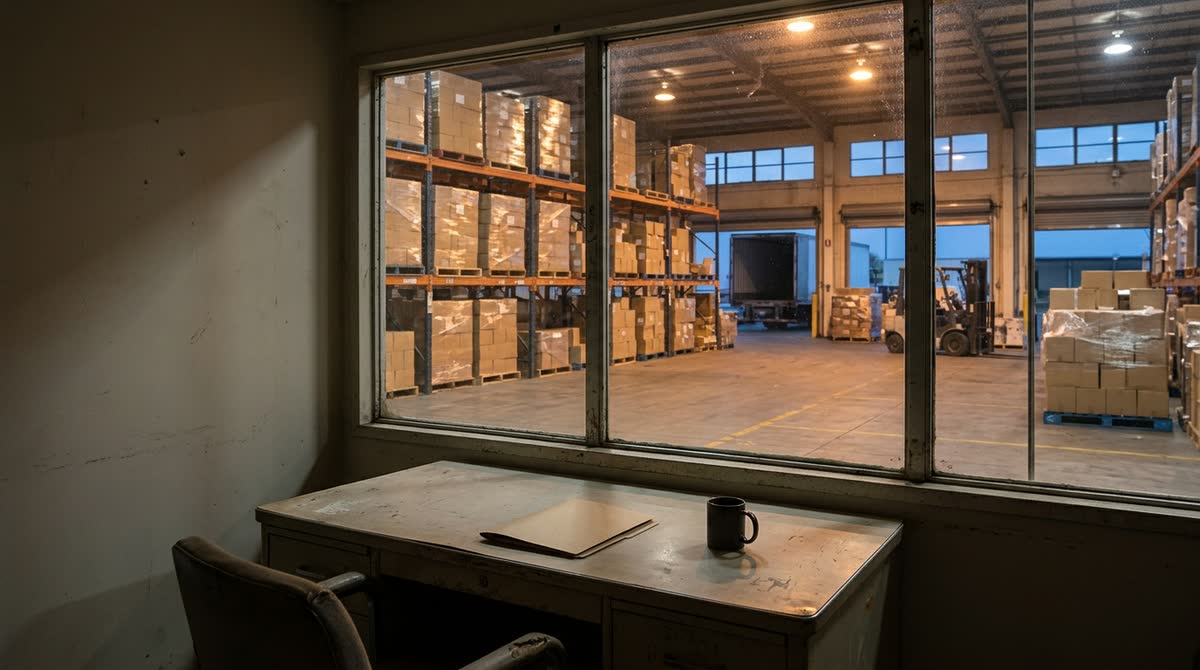
The cost of a freight dimensioner in 2026 depends on the type. A LiDAR app on an iPhone Pro or iPad Pro you already own can cost nothing: FreightSizer is free to download and use, with no subscription required. Stationary and automated systems are quoted by their vendors per installation. The price depends heavily on the technology used, accuracy requirements, integration needs, and the volume of freight being processed. Accurate freight dimensioning is no longer a luxury but a necessity for optimizing LTL (Less Than Truckload) freight classification, reducing reclassification charges, and improving overall logistics efficiency.
On 19 July 2025 the National Motor Freight Traffic Association's Docket 2025-1 took effect and moved many commodities to density-based classes (NMFTA Disposition Bulletin 1371, Docket 2025-1 (21 March 2025)), which makes precise measurement and classification more critical than ever. This article breaks down what drives the price of each type of dimensioning solution and shows how to size the return from your own carrier invoices and timings.
Key Takeaways
- The initial investment for freight dimensioning solutions varies widely, from nothing for a free app on a device you already own to a capital project for advanced automated systems.
- Mobile-based dimensioning using LiDAR technology offers a cost-effective entry point; FreightSizer is free, with no subscription.
- Integrated, automated dimensioning systems, typically used in high-volume distribution centers, are quoted per installation.
- Factors influencing cost include hardware type (handheld, stationary, overhead), software features (classification, density calculation, reporting), integration with TMS/WMS, and ongoing support.
- Return on investment is driven by reduced reclassification fees, improved dock efficiency, optimized trailer/container utilization, and enhanced data accuracy for billing and planning.
- Since the NMFC update of 19 July 2025, measured density decides the class for more commodities, so precise dimensioning matters more.
What are the Different Types of Freight Dimensioning Systems Available?
Freight dimensioning systems in 2026 fall into several categories, each with distinct cost implications and operational benefits. These range from simple manual tools to sophisticated, automated installations designed for high-throughput environments. Understanding these categories is crucial for evaluating the price point of any given solution.
The primary types include manual measurement tools, mobile scanning applications, stationary dimensioning systems, and fully automated overhead or conveyor-integrated solutions. Each offers a different balance of accuracy, speed, cost, and implementation complexity, catering to the diverse needs of freight forwarders, carriers, and shippers.
Manual Measurement Tools
Manual measurement tools, such as tape measures and basic scales, represent the lowest initial investment. However, these tools are highly labor-intensive, prone to human error, and extremely slow, leading to significant indirect costs in terms of labor time and potential reclassification fees.
Used carefully, a tape measure can capture the greatest dimensions the NMFC density rule asks for (NMFTA, Calculating Density Best Practices (updated 21 October 2026)), but results vary from person to person. They do not inherently calculate density or determine freight class, requiring separate manual calculations that further increase the risk of error and inefficiency.
Mobile Scanning Applications with LiDAR
Mobile scanning applications leveraging smartphone LiDAR technology offer a significant leap in accuracy and efficiency over manual methods, at a comparatively low cost. These solutions utilize the device's built-in sensors to capture precise 3D measurements of freight.
The cost is a compatible iPhone Pro or iPad Pro with LiDAR (if not already owned) and the app. Pricing differs by app: some charge a subscription, while FreightSizer is free to download and use, with measuring, freight class and XLSX export included and no subscription; its Enterprise option, for ERP, WMS and TMS integration and team accounts, is quoted per company. This category provides a powerful and accessible option for many LTL operations.
Stationary Dimensioning Systems
Stationary dimensioning systems are often found at loading docks or specific measurement points. These can include integrated scales and laser or camera-based measurement devices mounted on gantries or frames. They are designed for consistent measurement of goods as they pass through a designated area.
Vendors quote stationary systems per site; the price depends on the number of measurement axes, integration with scales, and software capabilities. These systems offer higher throughput than mobile solutions but require dedicated installation space.
Automated Overhead and Conveyor-Integrated Systems
For high-volume distribution centers and cross-docking facilities, fully automated systems are the most advanced and expensive option. These systems are typically integrated into conveyor belts or mounted overhead, automatically capturing dimensions, weight, and sometimes even identifying freight as it moves through the facility.
These comprehensive solutions are quoted per installation, with costs rising for multiple measurement points or complex integration with Warehouse Management Systems (WMS) and Transportation Management Systems (TMS). They provide the highest level of efficiency and accuracy but require substantial capital investment and infrastructure.
What Factors Influence the Price of a Freight Dimensioner?
The price of a freight dimensioner is not a monolithic figure; it's a composite of several variables that dictate the technology, features, and deployment complexity. Understanding these factors is key to budgeting and selecting the most appropriate solution for specific operational needs.
Technology type, accuracy requirements, software features, integration capabilities, hardware durability, and ongoing support are among the most significant determinants of a dimensioner's cost. Each element contributes to the overall value proposition and the investment required.
Technology Type and Accuracy
The underlying technology is a primary cost driver. LiDAR-based mobile apps, for instance, leverage existing smartphone hardware, reducing the need for dedicated, expensive sensor arrays. Conversely, industrial-grade laser scanners or advanced vision systems in stationary or automated setups command higher prices due to their specialized engineering and precision.
Accuracy requirements also play a role. While basic measurements might suffice for some internal tracking, in LTL freight classification a small measuring error near a density breakpoint changes the class, so accuracy matters more. Solutions with tighter published accuracy specifications or advanced volumetric calculations will naturally be priced higher than those offering broader tolerances.
Software Features and Functionality
The software bundled with a dimensioning system is as critical as the hardware. Basic software might only capture dimensions and calculate volume. More advanced packages will include features such as:
- Density Calculation: Automatically computing density based on measured dimensions and weight.
- LTL Freight Class Determination: Applying NMFC rules (including the 2025 updates) to assign the correct class.
- Data Reporting and Analytics: Generating reports on shipment volumes, density trends, and potential cost savings.
- Image Capture: Storing visual records of the freight.
- API Integration: Connecting with TMS, WMS, or ERP systems for seamless data flow.
Solutions offering sophisticated algorithms for freight class determination, robust reporting dashboards, and extensive integration capabilities will command higher prices. For example, a system that can dynamically adjust to new NMFC classifications as they are released will have a higher development and licensing cost.
Integration with Existing Logistics Software
The ability to seamlessly integrate a dimensioning system with existing Transportation Management Systems (TMS), Warehouse Management Systems (WMS), or Enterprise Resource Planning (ERP) software is a significant value-add and a cost factor.
Solutions that offer pre-built connectors or robust APIs for integration typically have higher upfront costs due to the development effort and ongoing maintenance required to ensure compatibility. This integration is vital for automating workflows, eliminating manual data entry, and deriving maximum efficiency from dimensioning data.
Hardware Durability and Environment
The physical environment where the dimensioner will operate influences the required hardware durability and, consequently, the cost. Systems intended for harsh warehouse environments, exposed to dust, moisture, or potential impact, will require more robust and ruggedized construction.
For instance, a handheld scanner used in a controlled office environment will be less expensive than a stationary sensor array designed for a busy, outdoor loading dock exposed to varying weather conditions. Industrial-grade components and protective casings add to the overall price.
Ongoing Support, Maintenance, and Updates
Beyond the initial purchase price, ongoing costs for support, maintenance, and software updates must be considered. Many vendors offer service level agreements (SLAs) that include technical support, hardware repair or replacement, and regular software updates to ensure compliance with evolving industry standards, such as the NMFC updates.
Ask vendors to quote these ongoing fees alongside the purchase price, including what keeps the freight classification logic up to date; the NMFC is updated twice a year (NMFTA, Upcoming Key Dates for the NMFC Data Updates (updated 9 June 2026)).
How Much Does a Mobile Freight Dimensioning App Cost?
Mobile freight dimensioning apps, particularly those leveraging LiDAR technology on iPhones and iPads, represent a highly accessible and cost-effective entry point into accurate freight measurement. Where an app charges, it is usually a subscription, an operating expense rather than a large capital outlay; FreightSizer charges nothing for measuring, freight class and export.
These applications provide a powerful solution for smaller to medium-sized businesses, or those looking to pilot dimensioning technology without significant upfront investment. They democratize access to precise measurement capabilities previously only available with expensive hardware.
Subscription Models and Free Apps
Apps that charge usually do so monthly or annually, by features or usage, so check each app's current price in the App Store. When comparing, look at what each option includes:
- Core measurement: Length, width and height, volume and density. In FreightSizer these are free, with unlimited scans.
- Freight class: Determination in line with NMFTA guidelines, including the standards effective 19 July 2025. Free in FreightSizer, along with XLSX export of your measurements.
- Enterprise features: ERP, WMS and TMS integration, team accounts, shared measurement history and white-label deployment. FreightSizer quotes these per company.
The cost of the smartphone or tablet itself is a separate consideration. If a business already has compatible devices, the cost is limited to the app. New devices must be iPhone Pro or iPad Pro models with LiDAR; check Apple's current prices.
What's Included in the Price?
When subscribing to a mobile dimensioning app, the price covers access to the software and its features. This includes the measurement algorithms, the user interface for capturing data, and the processing power to calculate volume and density.
Crucially, for apps that determine LTL freight class, check that the classification logic is kept current: the NMFC is updated twice a year, and the largest recent change took effect on 19 July 2025 (Bulletin 1371).
Advantages of Mobile App Pricing
The primary advantage of mobile app pricing is its low barrier to entry. With FreightSizer there is no subscription to budget for, so a team can start measuring at no cost and scale as needed.
As operations grow or needs evolve, businesses can add enterprise features. This flexibility means they are not locked into expensive hardware that may become obsolete or insufficient. The use of existing smartphone hardware also reduces the overall cost of ownership.
How Much Do Stationary and Automated Freight Dimensioning Systems Cost?
Stationary and automated freight dimensioning systems represent a significant capital investment, typically suited for businesses with higher freight volumes and a need for integrated, high-throughput measurement processes. The costs here are substantially higher than mobile solutions, reflecting the specialized hardware, installation, and integration involved.
These systems are designed for environments where speed, accuracy, and process automation are paramount, such as large distribution centers, cross-docking facilities, and manufacturing plants. The price reflects not just the hardware but also the engineering required for seamless operation within a logistics workflow.
Stationary Systems: Dock-Mounted and Pallet Scanners
Stationary dimensioning systems, often installed at dock doors or specific measurement points, can vary widely in price depending on their complexity.
- Basic Dock-Mounted Systems: These might involve fixed laser scanners or camera-based systems mounted on a frame or gantry above a loading bay. They can measure palletized or individual items as they are moved. Vendors quote these per site.
- Integrated Pallet Dimensioners: These systems often combine dimensioning with integrated scales, offering a comprehensive measurement solution for pallets. They might include conveyor integration or be designed for forklift loading. Prices are quoted per installation.
These systems require professional installation, which is usually quoted separately, so ask for it in the quote. Software for data management and reporting is typically included, but advanced analytics or integration modules may incur extra fees.
Automated Systems: Conveyor and Overhead Integration
Fully automated dimensioning systems are the most sophisticated and costly. These are typically found in high-volume operations where freight moves continuously on conveyor systems or is measured from overhead.
- Conveyor-Integrated Systems: These systems are built into existing or new conveyor lines. As items move along the belt, sensors automatically capture dimensions and weight. Costs are quoted per installation and depend on the length of the conveyor, the number of measurement points, and the required throughput speed.
- Overhead Automated Systems: Mounted above dock doors or conveyor junctions, these systems use advanced sensors (e.g., multiple LiDAR units, high-resolution cameras) to capture dimensions of irregularly shaped items or entire loads. These are often custom-engineered solutions, priced per project.
These automated systems often include robust software for real-time data processing, integration with WMS/TMS, and advanced reporting. Installation and commissioning can add a substantial percentage to the overall project cost, often requiring specialized engineering teams.
Factors Driving Higher Costs in Automated Systems
The higher cost of automated systems is driven by several factors:
- Advanced Sensor Technology: Utilizing multiple, high-precision sensors for comprehensive 3D capture.
- Engineering and Customization: Often requiring custom design to fit specific facility layouts and workflows.
- Integration Complexity: Deep integration with WMS, TMS, and other facility automation systems.
- Throughput and Speed: Designing systems to handle high volumes of freight at rapid speeds.
- Durability and Reliability: Building robust hardware capable of continuous operation in demanding environments.
When evaluating these systems, it's crucial to consider not just the upfront capital expenditure but also the total cost of ownership, including installation, maintenance, software licenses, and potential upgrades.
What is the Return on Investment (ROI) for Freight Dimensioners?
The return on investment (ROI) for freight dimensioners is a critical consideration for any logistics operation. While the upfront cost can vary significantly, the financial benefits derived from accurate dimensioning and classification often lead to substantial savings and improved operational efficiency.
The ROI is primarily realized through the reduction of costly reclassification fees, optimization of trailer and container space, improved labor efficiency, and enhanced data accuracy for billing and planning. The updated NMFC standards effective July 19, 2025, further amplify the importance of accurate dimensioning for maximizing ROI.
Reducing Reclassification Fees
One of the most direct and impactful benefits of freight dimensioners is the reduction in reclassification fees. Inaccurate dimensions or weight reported by shippers or carriers can lead to shipments being reclassified by the carrier, often resulting in significant additional charges.
To size this for your own operation, add up the reclass and inspection charges on your carrier invoices over the last few months. That figure, not an industry average, is what better dimensioning can reduce.
Compare the annual cost of a solution with that figure to see how many charges it would need to prevent to pay for itself.
Optimizing Trailer and Container Utilization
Accurate dimensioning allows for precise calculation of freight volume, enabling better space utilization in trailers and containers. This is particularly crucial for LTL carriers who often consolidate multiple shipments.
By knowing the exact cubic volume of each shipment, carriers can optimize loading patterns, fill trailers more effectively, and potentially reduce the number of less-than-full trailers dispatched. This can lead to fewer trips, lower fuel costs, and increased revenue per shipment. For shippers, better cube utilization can mean fewer shipments needing to be sent.
Improving Labor Efficiency and Speed
Manual dimensioning using tape measures is time-consuming and labor-intensive. Implementing automated or mobile dimensioning solutions significantly speeds up the process.
A mobile app measures a pallet in one scan, without a second person holding the tape. Stationary and automated systems can measure freight as it moves, eliminating dedicated measurement stops. This frees up dock personnel to focus on other critical tasks, improving overall warehouse and dock efficiency.
The time saved per shipment translates directly into labor cost savings and increased throughput capacity. To size it, time how long your team takes to measure and record a pallet today and multiply by your daily shipments.
Enhancing Data Accuracy and Billing Precision
Accurate dimensioning data is fundamental for precise billing and financial reconciliation. When dimensions and weight are captured correctly at the source, it minimizes disputes and ensures that both shippers and carriers are operating on the same, accurate information.
This improved data integrity leads to smoother invoicing processes, reduces administrative overhead associated with resolving billing discrepancies, and builds stronger trust between trading partners. For carriers, accurate data is essential for applying the correct freight class and tariffs, especially with the evolving NMFC standards.
Frequently Asked Questions
What is the cheapest way to get freight dimensions?
The cheapest way to obtain freight dimensions is by using a mobile scanning application on a smartphone or tablet with LiDAR capabilities. FreightSizer is free to download and use, with no subscription required, on an iPhone Pro or iPad Pro with LiDAR.
Are freight dimensioners worth the investment?
It depends on what reclass and inspection charges cost you today. Add up those charges on your carrier invoices over recent months and compare them with the annual cost of the solution; a free app such as FreightSizer costs nothing to try.
How does the NMFC 2025 update affect dimensioner costs?
Docket 2025-1, effective 19 July 2025, moved many commodities to density-based items (Bulletin 1371), so for more freight the measured density decides the class. While it doesn't directly increase the cost of dimensioning hardware, it raises the stakes for using precise measurement tools to avoid penalties and ensure correct classification, making the ROI for accurate dimensioners even more compelling.
Can I use my smartphone as a freight dimensioner?
Yes, with the advent of LiDAR technology on many modern smartphones and tablets, you can use your device as a freight dimensioner with the help of specialized apps. These applications convert your device into a powerful measurement tool for logistics.
What is the average lifespan of a freight dimensioner system?
The lifespan of a freight dimensioner system varies. Mobile apps, being software, are continuously updated. For hardware-based systems like stationary or automated units, ask the vendor for the support period and maintenance terms; lifespan depends on the quality of components, maintenance, and environmental factors.
Conclusion
The cost of freight dimensioners in 2026 is a multifaceted question with answers spanning from budget-friendly mobile applications to substantial investments in automated systems. For freight forwarders, LTL carriers, 3PL providers, and warehouse teams grappling with the complexities of LTL freight classification and the implications of the NMFC 2025 standards, understanding these cost structures is paramount.
By accurately measuring freight dimensions and calculating density, businesses can significantly mitigate reclassification charges, optimize logistics operations, and ensure compliance. Whether opting for the accessibility of a mobile LiDAR solution like FreightSizer, or investing in robust stationary or automated hardware, the strategic implementation of dimensioning technology is a critical step towards enhanced profitability and operational excellence in today's demanding logistics landscape.