
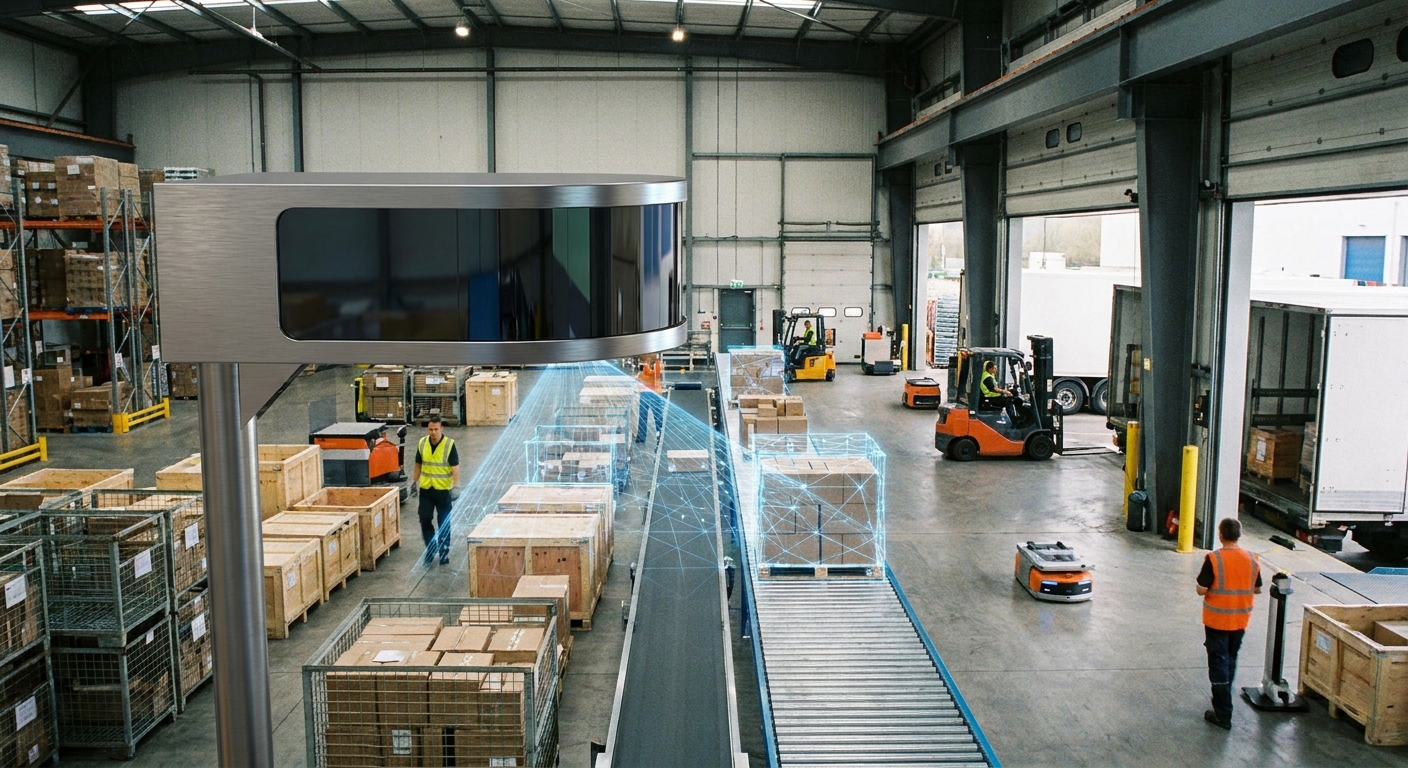
Beyond the Tape Measure: Advanced Alternatives to a Freight Dimensioning System in 2026
The most effective alternatives to traditional freight dimensioning systems for LTL logistics in 2026 involve leveraging advanced technology that automates measurement, density calculation, and freight class determination, significantly reducing manual effort and potential for error. In 2025, the NMFTA updated its guidelines, making accurate, real-time data crucial for compliance and cost control. This article explores these modern solutions, focusing on their impact on freight forwarders, LTL carriers, 3PL providers, warehouse teams, and shippers navigating complex freight classification.
Key Takeaways
- Advanced mobile apps utilize LiDAR for precise freight dimensioning, replacing manual methods.
- Automated density calculation is critical for accurate LTL freight class determination.
- Understanding NMFC standards, especially the 2025 updates, is paramount for compliance.
- Technology integration streamlines warehouse operations and minimizes reclassification charges.
- Data accuracy directly impacts carrier billing and shipper cost management.
What are the primary challenges with traditional freight dimensioning methods?
Traditional freight dimensioning relies on manual measurements using tape measures, leading to significant inefficiencies, inaccuracies, and potential for disputes. These methods are time-consuming, expose staff to potential injury, and often result in subjective readings.
The reliance on manual data entry also introduces a high risk of transcription errors. These errors can cascade into incorrect freight class assignments, leading to unexpected reclassification charges and revenue discrepancies for carriers and increased costs for shippers. The labor-intensive nature of manual measurement means that processing large volumes of freight can become a bottleneck in warehouse operations.
How can technology automate freight measurement and classification?
Modern technological solutions automate the entire process of freight dimensioning and classification by integrating advanced sensors and intelligent software. These systems capture precise dimensions, calculate crucial metrics like density, and determine the LTL freight class in accordance with NMFC standards.
These automated systems often utilize LiDAR (Light Detection and Ranging) technology to capture highly accurate 3D measurements of irregularly shaped freight, eliminating the subjectivity inherent in manual measurements. Once dimensions are recorded, the software automatically calculates volume and density, which are key inputs for determining the correct freight class.
What are the benefits of using integrated dimensioning and classification technology?
Integrated dimensioning and classification technology offers substantial benefits by improving accuracy, increasing operational efficiency, and reducing costly errors in LTL logistics. This technological shift streamlines workflows from the dock to the billing department.
The primary benefit is the dramatic reduction in measurement errors. Unlike manual methods, which are prone to human oversight, automated systems provide consistent and precise data. This accuracy directly translates into fewer disputes over freight charges and a significant decrease in unexpected reclassification fees for shippers.
Furthermore, the time saved by eliminating manual measurement processes can be reinvested in other critical operational areas. Warehouse staff can process more shipments in less time, improving throughput and overall warehouse productivity. Carriers benefit from faster load verification and more accurate billing, leading to improved cash flow.
How does automated dimensioning improve accuracy and reduce errors?
Automated dimensioning systems, particularly those employing LiDAR, capture precise, objective measurements of freight dimensions, thereby eliminating human error and subjective interpretation. This leads to a verifiable data set for every shipment.
These systems capture length, width, and height with millimeter-level precision, even for irregularly shaped items. This level of accuracy is crucial for calculating volumetric weight and density correctly. By removing the need for manual input and interpretation, the risk of transcription errors or misreadings is virtually eliminated, ensuring that the dimensions used for classification are always correct.
How do these technologies streamline LTL freight classification?
By integrating dimensioning with classification algorithms, these technologies create a seamless workflow that significantly speeds up the LTL freight classification process. This automation ensures compliance with current and future NMFC standards.
Once accurate dimensions are captured, the system automatically calculates freight density. This density, along with the commodity description and other relevant shipment details, is fed into an algorithm that determines the appropriate LTL freight class based on the National Motor Freight Classification (NMFC) guidelines. This eliminates the need for manual lookups and subjective judgment, ensuring consistency and speed.
What are the most advanced alternatives to a freight dimensioning system for LTL carriers and forwarders?
The most advanced alternatives to traditional freight dimensioning systems for LTL carriers and forwarders in 2026 are mobile-based solutions that leverage smartphone or tablet LiDAR capabilities for precise measurement and integrated software for intelligent classification. These solutions replace bulky, dedicated hardware and manual processes.
These applications, such as FreightSizer, allow users to capture accurate freight dimensions using their existing mobile devices. The LiDAR sensor on the device creates a precise 3D scan of the cargo, which is then processed by the app to calculate exact length, width, and height. This eliminates the need for tape measures and physical dimensioning stations.
How do LiDAR-enabled mobile apps work for freight measurement?
LiDAR-enabled mobile apps utilize the device's integrated LiDAR sensor to scan and map the physical space occupied by the freight, creating a highly accurate digital model. This model is then used to extract precise dimensional data.
The LiDAR sensor emits pulsed laser beams and measures the time it takes for them to return after reflecting off surfaces. This data is used to construct a detailed point cloud, representing the 3D shape of the cargo. The app's software then analyzes this point cloud to determine the maximum length, width, and height, even for items with complex or irregular shapes.
How do these apps assist with LTL freight class determination?
These mobile applications integrate advanced algorithms that use the captured dimensions and user-provided commodity information to determine the LTL freight class according to NMFC standards. This process is significantly faster and more accurate than manual methods.
After the dimensions are captured, the app calculates the freight density (weight per cubic foot). This density, combined with the specific freight item (e.g., electronics, furniture, machinery) and its handling characteristics, is processed through a classification engine. This engine references the NMFC database to assign the correct class, including adherence to the latest NMFC standards effective July 19, 2025.
What are the implications of the NMFC 2025 updates on freight dimensioning and classification?
The NMFC standards effective July 19, 2025, introduce updated parameters and potentially new considerations for freight classification, making accurate and consistent dimensioning more critical than ever for LTL logistics operations. These changes aim to better reflect the actual space occupied by freight.
These updates may involve adjustments to density thresholds for certain commodity classes or the introduction of new sub-classes. For carriers and shippers, this means that even minor inaccuracies in dimensioning or density calculation can now lead to incorrect classifications and, consequently, incorrect billing. Staying compliant requires a robust and accurate dimensioning process.
How do updated NMFC standards affect density calculations?
Updated NMFC standards often refine the density ranges that define specific freight classes, meaning that precise density calculation is now more impactful than before. Small variations can shift a shipment between classes.
For example, a previously defined class might now have a slightly tighter density band, or a new class might be introduced for a specific density range. This necessitates highly accurate measurement of both volume and weight to ensure the calculated density falls within the correct parameters for the commodity being shipped.
How can modern systems ensure compliance with the latest NMFC guidelines?
Modern dimensioning and classification systems are designed to be continuously updated to reflect the latest NMFC guidelines, including the significant updates effective July 19, 2025. This ensures ongoing compliance without manual intervention.
These systems incorporate the most current NMFC tariff data into their classification engines. When a shipment’s dimensions and commodity details are entered, the system automatically applies the latest rules and thresholds. This proactive approach minimizes the risk of non-compliance due to outdated classification logic.
What are the operational and financial impacts of accurate freight dimensioning?
Accurate freight dimensioning has profound operational and financial impacts across the LTL supply chain, from the warehouse floor to the carrier's billing department. It directly influences efficiency, cost, and revenue.
On the operational side, accurate dimensioning speeds up the intake and processing of freight. It reduces the time spent by staff on manual measurements and subsequent data entry. This improved efficiency allows for higher throughput in busy logistics hubs.
Financially, accuracy prevents costly reclassification charges for shippers and ensures correct revenue for carriers. It minimizes disputes and the administrative overhead associated with resolving billing discrepancies.
How does accurate dimensioning reduce reclassification charges for shippers?
Accurate freight dimensioning significantly reduces reclassification charges for shippers by ensuring the correct LTL freight class is assigned at the point of origin. This prevents disputes and unexpected fees later in the supply chain.
When freight is accurately measured and classified initially, it meets the carrier's expectations for space utilization and handling. This eliminates the common reasons for reclassification, such as dimensions being larger than declared or density being lower than anticipated, which often result in higher freight bills.
How does accurate dimensioning impact LTL carrier revenue and profitability?
Accurate dimensioning directly impacts LTL carrier revenue and profitability by ensuring that shipments are billed correctly based on their actual size and density, reflecting the space they occupy on the truck. This leads to more predictable revenue streams.
Carriers rely on accurate weight and dimension data to maximize trailer utilization and ensure fair pricing. When dimensions are underestimated, carriers may lose revenue by undercharging for the space consumed. Conversely, accurate data allows for optimized load planning and ensures that all revenue due is collected.
How can warehouse teams leverage technology to improve freight handling?
Warehouse teams can leverage advanced freight dimensioning and classification technology to significantly improve freight handling efficiency, accuracy, and safety. These tools transform manual processes into automated, data-driven operations.
By integrating these technologies, warehouse staff can reduce the time spent on manual measurement tasks, allowing them to focus on higher-value activities such as order picking, packing, and loading. The objective data captured also minimizes errors in documentation and billing, reducing the need for costly rework.
What are the benefits of real-time dimensioning data for warehouse operations?
Real-time dimensioning data provides warehouse operations with immediate insights into the size and volume of incoming and outgoing freight, enabling better space management and load planning. This immediate feedback loop is crucial for dynamic logistics environments.
This data allows for more accurate staging of pallets and shipments, ensuring that trucks are loaded efficiently and that space within the warehouse is utilized optimally. It also provides immediate feedback on whether freight meets density requirements for specific shipping lanes or service levels, allowing for proactive adjustments.
How does this technology contribute to a safer warehouse environment?
Technology that automates freight measurement contributes to a safer warehouse environment by reducing the need for manual handling and physical interaction with potentially large or awkwardly shaped packages. This minimizes the risk of workplace injuries.
Eliminating the need for workers to climb on or around freight to take measurements with tape measures reduces the risk of falls or strains. Furthermore, by providing accurate data upfront, it can inform decisions about the appropriate lifting equipment or handling procedures required for specific shipments.
Frequently Asked Questions
What is the most significant advantage of using a mobile app for freight dimensioning over a traditional system?
The most significant advantage is the portability and cost-effectiveness; a mobile app leverages existing hardware and eliminates the need for dedicated, expensive dimensioning stations, while still providing highly accurate LiDAR-based measurements.
How does FreightSizer ensure compliance with the NMFC standards effective July 19, 2025?
FreightSizer is designed to be updated with the latest NMFC tariff data, ensuring its classification engine adheres to the updated parameters and thresholds implemented with the July 19, 2025, NMFC standards.
Can these advanced systems handle irregularly shaped freight, which is common in LTL?
Yes, LiDAR-based systems excel at measuring irregularly shaped freight by creating a precise 3D scan, overcoming the limitations of tape measures and standard dimensioning cubers.
What is the typical implementation time for a mobile-based freight dimensioning solution?
Implementation is generally swift, often taking only a few hours to download the app, configure basic settings, and train staff on its usage, compared to days or weeks for installing dedicated hardware.
How does the accuracy of LiDAR-based measurement compare to traditional methods?
LiDAR-based measurement offers superior accuracy, typically to within millimeters, far surpassing the inherent variability and potential for error found in manual tape measurements.
Conclusion
In 2026, the landscape of LTL freight logistics demands precision and efficiency, making advanced alternatives to traditional freight dimensioning systems not just beneficial, but essential. By embracing technologies that automate measurement, density calculation, and freight class determination, businesses can navigate the complexities of NMFC standards, including the critical updates from July 2025, with greater confidence and accuracy. These modern solutions empower freight forwarders, LTL carriers, 3PL providers, warehouse teams, and shippers to reduce errors, minimize reclassification charges, optimize operations, and ultimately enhance profitability.